Why Plain Water Isn’t Always Enough (And That’s Perfectly Normal)
Let me start with something that might surprise you: chugging eight glasses of plain water every day isn’t necessarily the hydration gold standard we’ve been led to believe. I see the confusion in my clients’ faces all the time when they tell me they’re drinking tons of water but still feeling sluggish, getting headaches, or experiencing that afternoon energy crash. Here’s what clicked for me: your body doesn’t just need water. It needs the right balance of electrolytes to actually use that water effectively.
Think of your cells like tiny sponges. Plain water can flood the area around them, but without proper sodium, potassium, and magnesium levels, those sponges can’t absorb what they need. This is why you might find yourself running to the bathroom every hour after drinking a large water bottle, feeling more depleted than refreshed. Your kidneys are working overtime to process all that plain water. You’re actually flushing out the minerals that help your body retain and use hydration at the cellular level.
The eight-glasses-a-day rule came from a 1945 recommendation that included water from food sources. Somehow the food part got lost over the decades. Your actual hydration needs depend on your activity level, climate, body size, and overall health. Some days you need more, some days less. That’s completely normal and healthy.

The Electrolyte Truth: Not All Are Created Equal
The sports drink industry has done us both a favor and a disservice. They’ve made us aware that electrolytes matter, but they’ve also convinced many people that neon-colored sugar water is the answer. Real electrolyte balance is more complex than what you’ll find in most commercial sports drinks. And honestly? More interesting too.
Sodium gets a bad reputation, but it’s actually necessary for hydration. Your body needs about 200-300mg of sodium per 16-20 ounces of fluid during active periods or hot weather. The key is choosing quality sources: a pinch of sea salt in your water, naturally fermented foods like sauerkraut, or even a small handful of salted nuts. All of these give you what you need without the artificial additives found in many sports drinks.
Potassium works as sodium’s partner, helping maintain proper fluid balance inside your cells. While bananas get all the credit, foods like coconut water, watermelon, and leafy greens are actually more potent sources. Magnesium gets overlooked, but it supports over 300 enzymatic reactions in your body and helps prevent those mysterious muscle cramps that can signal dehydration even when you’re drinking plenty of fluids.
Here’s what actually works: if you’re sweating for more than an hour or it’s particularly hot, add a small pinch of quality sea salt to your water. If you prefer something with flavor, coconut water provides natural potassium and a touch of sodium without added sugars. For longer activities, consider making your own electrolyte drink with water, a pinch of salt, a squeeze of lemon, and a small amount of natural sweetener if desired.
Food as Hydration: The Most Underestimated Strategy
About 20% of your daily fluid intake typically comes from food, but this number can be much higher if you’re strategic about it. Water-rich foods don’t just provide fluids. They deliver electrolytes, vitamins, and minerals in forms your body can easily absorb and use. This is why eating a cucumber or watermelon can sometimes be more satisfying and effective than drinking the same amount of plain water.
Fruits and vegetables with high water content also provide fiber, which helps your body retain fluids more effectively. Think of fiber as a natural time-release system for hydration. Foods like cucumbers (96% water), tomatoes (94% water), and oranges (87% water) deliver sustained hydration along with nutrients that support your body’s natural fluid balance systems.
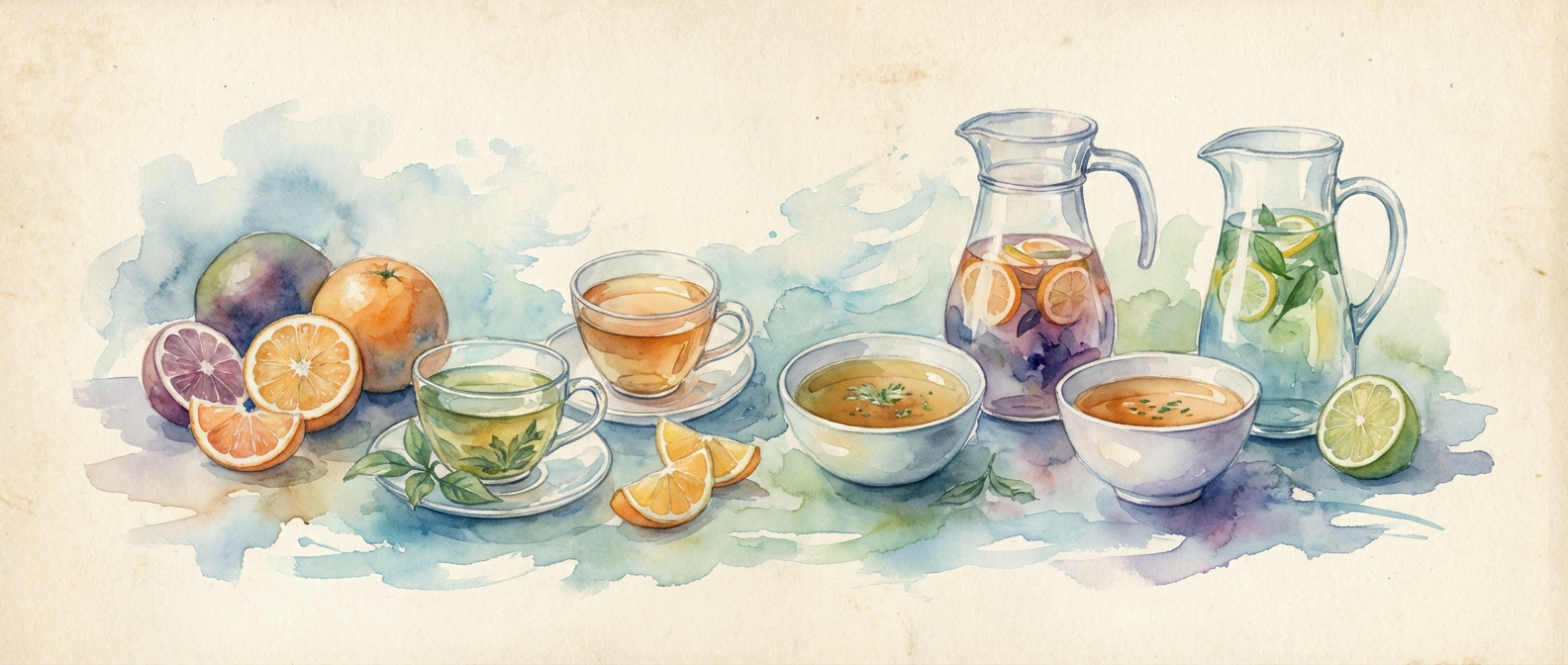
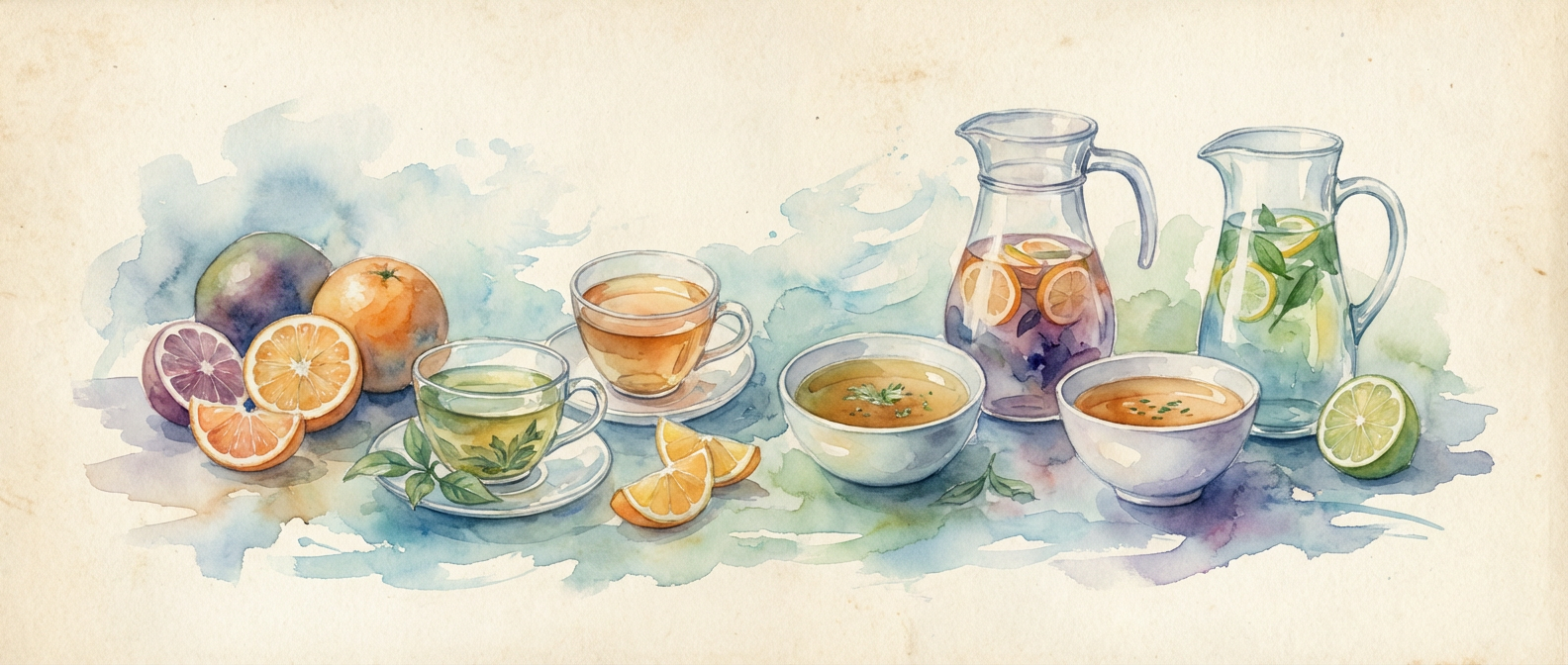
Soups and broths deserve special recognition here. They provide fluids, electrolytes from salt and vegetables, and when made with bone broth, additional minerals like calcium and phosphorus. A warm bowl of vegetable soup can be more hydrating than a cold glass of water, especially during cooler months when your body might not crave cold fluids.
Even dairy products like milk contain natural electrolytes and proteins that can aid in hydration. Research published in the American Journal of Clinical Nutrition has shown that milk can be more effective than water or sports drinks for post-exercise rehydration because of its natural sodium and protein content.
Timing and Temperature: The Details That Make a Difference
When and how you hydrate can be just as important as what you’re drinking. Your body processes fluids differently throughout the day. Understanding these rhythms can help you optimize your hydration strategy without overthinking it.
Starting your day with fluids makes sense because you’ve been fasting for 6-8 hours, but chugging a huge glass of cold water first thing can actually stress your digestive system. Instead, try room temperature water with a pinch of salt and lemon, or herbal tea. This gives your body gentle rehydration while supporting your natural wake-up process.
During meals, the timing of fluid intake matters more than many people realize. Drinking large amounts during eating can dilute your digestive enzymes. Sipping small amounts or having hydrating foods as part of your meal supports both digestion and fluid balance. Save the bigger drinks for between meals when your digestive system isn’t working as hard.
Temperature preferences aren’t just about comfort. Cold fluids can be absorbed more quickly, which is why they feel refreshing during hot weather or intense exercise. Room temperature fluids are easier on your digestive system and might be better for everyday sipping. Listen to your body’s cues here. They’re usually accurate.
Signs You’re Getting It Right (And When to Adjust)
Proper hydration shows up in ways that go beyond just not feeling thirsty. Your energy levels become more stable throughout the day. Your skin has better elasticity. You’re not constantly thinking about when you last drank something. Your urine should be light yellow most of the time, though it can be darker in the morning and that’s completely normal.
Pay attention to your individual patterns. Some people naturally need more fluids, others less. Factors like medication, health conditions, pregnancy, and breastfeeding all affect hydration needs. If you’re consistently following good hydration practices but still experiencing persistent fatigue, headaches, or other symptoms, it’s worth discussing with a healthcare provider. Sometimes these can indicate underlying issues.
The goal isn’t perfection, it’s consistency and awareness. Notice how different hydration strategies make you feel. Maybe you discover that coconut water after morning workouts makes a huge difference, or that having soup for lunch prevents that 3 PM energy dip. These small observations add up to big improvements in how you feel day to day.
I’d love to hear what hydration strategies work best for you. Have you noticed differences when you focus on electrolyte balance, or found that certain foods help you feel more hydrated? Share your experiences in the comments below, and let’s keep this conversation going about practical, sustainable ways to support our bodies.