When a Weight Loss Drug Becomes Something Bigger
You’ve probably heard about semaglutide. It’s the medication making headlines for helping people lose weight, and yes, that matters. But here’s what has researchers genuinely excited right now: these drugs appear to be doing something unexpected in the brain itself, something that goes far beyond appetite suppression.
When I say “unexpected,” I mean unexpected in the best possible way. A landmark study published in January 2026 found that semaglutide reduced symptoms of alcohol use disorder in 62% of participants over a 6-month trial. That’s not a modest improvement. That’s not marginal. That’s the kind of number that makes researchers sit up straighter in their chairs because it suggests something fundamental is shifting in how we might approach some of the hardest mental health challenges people face.
The reason this matters isn’t just about the statistic itself. It matters because for decades, we’ve treated substance use disorders and mood disorders as primarily neurochemical problems that exist in one locked box, separate from metabolic health. What’s emerging from the research in 2025 and 2026 suggests those boxes aren’t as separate as we thought.
The FDA Is Paying Attention, and That Tells You Something
The FDA doesn’t hand out Breakthrough Therapy designations casually. It’s reserved for drugs that show evidence of substantial improvement over available alternatives for serious conditions. In the final quarter of 2025, the FDA granted this designation to a GLP-1 receptor agonist specifically for major depressive disorder, based on preliminary trial data showing a 40% symptom reduction in depression scores.
Let me be clear about what that number means and what it doesn’t mean. A 40% reduction doesn’t mean someone goes from suicidal to completely fine. But it does mean that if you’re taking a medication for depression right now and it’s giving you a 40% improvement in your core symptoms, you’re probably sleeping better. You’re probably getting out of bed more easily. You’re probably having fewer days where everything feels like you’re moving through water. That’s real. That’s material.
What makes this even more striking is the context. We don’t see many antidepressants get Breakthrough Therapy designation anymore. The most recent major designations came years ago. The fact that researchers found enough signal in preliminary GLP-1 depression trials to warrant this kind of regulatory green light suggests they’re seeing something genuinely novel in the mechanism.
The Numbers on Who’s Actually Getting These Prescriptions
Novo Nordisk reported in its Q4 2025 earnings call that over 9 million Americans were actively prescribed semaglutide-class drugs. That’s a staggering number. But here’s the detail that deserves your attention: off-label mental health prescriptions are rising 18% quarter-over-quarter. That means doctors are prescribing these medications for depression, anxiety, and addiction-related conditions at an accelerating rate, even though most of these uses aren’t yet officially FDA-approved.
Why does this matter? Because when you see that kind of adoption rate for off-label use, it usually means clinicians are observing real benefits in their patients. Doctors aren’t typically going to prescribe something repeatedly for a non-approved indication if they’re not seeing results. They face liability concerns, patient safety questions, and their own professional judgment to answer to.
The growth rate also matters statistically. An 18% quarter-over-quarter increase means the use is doubling roughly every year and a half. In healthcare, that’s exceptionally fast adoption for an off-label application. It suggests we’re in the early stages of something that’s accelerating, not stabilizing.
What’s Happening Inside Your Brain: The Mechanism Actually Makes Sense
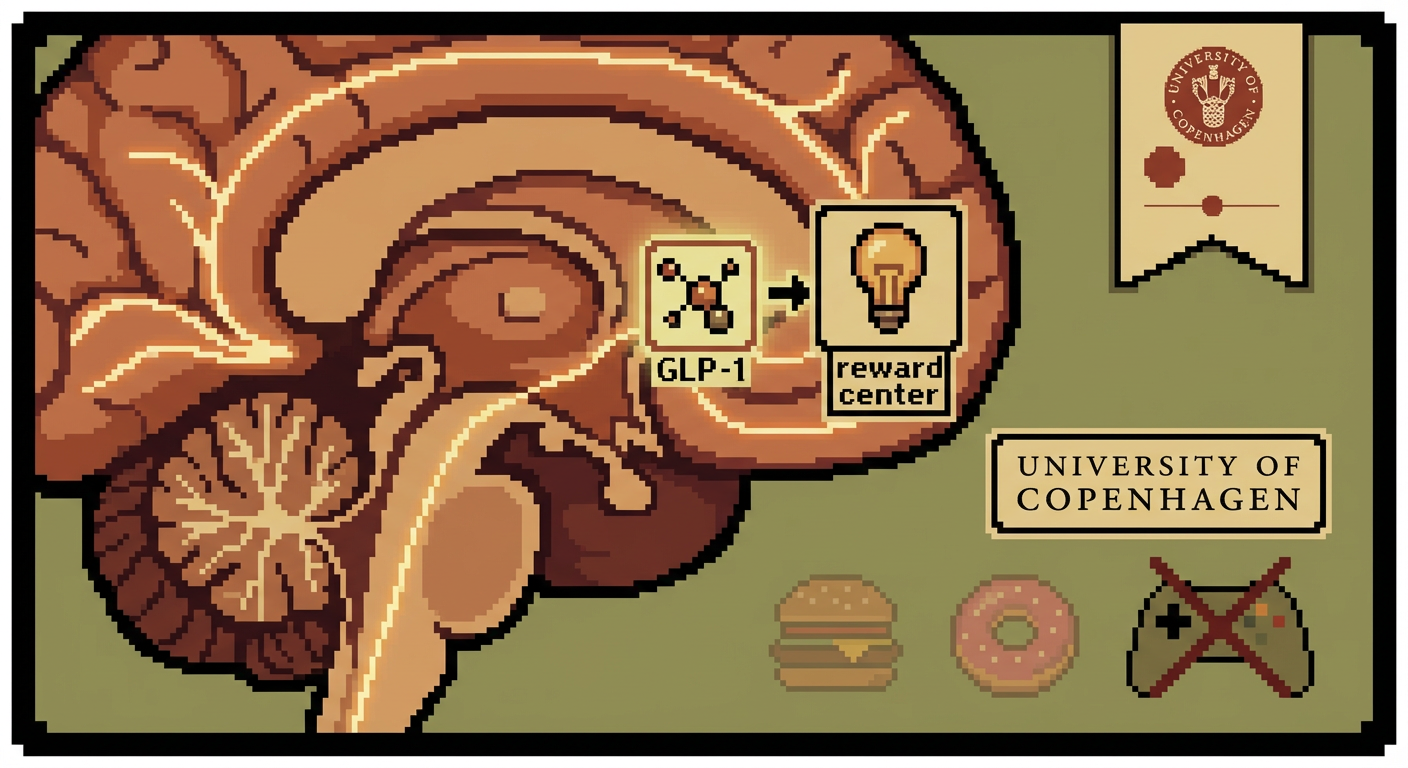
Here’s where the science gets genuinely interesting. A University of Copenhagen study released in February 2026 identified GLP-1 receptors in the brain’s reward pathway. This matters because the reward pathway is involved in far more than just eating. It’s involved in addiction. It’s involved in motivation. It’s involved in depression itself, which increasingly appears to involve a dysfunction in the brain’s ability to generate and process reward signals.
When researchers found these receptors in the reward pathway, it explained something that previously seemed almost magical: why a drug initially designed for blood sugar control would reduce alcohol cravings, reduce depression symptoms, and apparently help with compulsive behaviors across the board. It’s not magic. It’s a mechanism. GLP-1 agonists appear to be acting directly on the neural circuits that generate motivation and reward, not just affecting appetite hormones.
This is why the mechanism matters as much as the numbers do. If we understand how something works, we can predict who it might help, optimize how we use it, and potentially develop better versions of it. Understanding mechanism transforms an observation into actionable science.
The Research Commitment Tells You Where This Is Headed
The NIH allocated $180 million in its 2026 fiscal budget specifically for GLP-1 neurological research. That’s the largest single-year commitment this agency has made to this drug class for non-metabolic outcomes. The NIH doesn’t deploy $180 million casually. That money is a formal acknowledgment that this isn’t a fringe area anymore.
You can access the full scope of what they’re funding through NIH National Institute on Drug Abuse GLP-1 Studies, which catalogs active research on GLP-1 and addiction, depression, and other neurological conditions. The breadth of what’s being studied is genuinely impressive: everything from addiction mechanisms to anxiety disorders to potential applications we probably haven’t even theorized yet.
For more detailed research on how GLP-1 affects brain health, Nature Medicine GLP-1 and Brain Health Research is publishing the most current peer-reviewed findings from leading institutions worldwide.
What This Means for You, Honestly
Here’s what I want you to understand without overselling this: we’re at an interesting inflection point, but we’re not at the finish line. The data from 2025 and 2026 suggests GLP-1 agonists have real mental health applications. But we’re still in the early-to-middle stages of understanding the full scope of those applications, the best ways to use them, which patients will benefit most, and what the long-term outcomes look like.
If you’re struggling with depression, addiction, or anxiety, this research matters because it means the conversation around your treatment is expanding. Your doctor has more options to discuss. That’s good. It means if one approach isn’t working, there are increasingly evidence-based alternatives emerging.
If you’re researching this for yourself or someone you care about, the responsible move is the same one it always is: talk to your doctor about what the current evidence shows, what might work for your specific situation, and what we still need to learn. The numbers are encouraging. The mechanisms are coherent. The research commitment is serious. But individual decisions always have to happen in conversation with someone who knows your complete medical picture.
What aspects of this research are you most curious about? Whether you’re thinking about this personally or just tracking where neuroscience is headed, I’d genuinely like to hear what questions this raises for you.