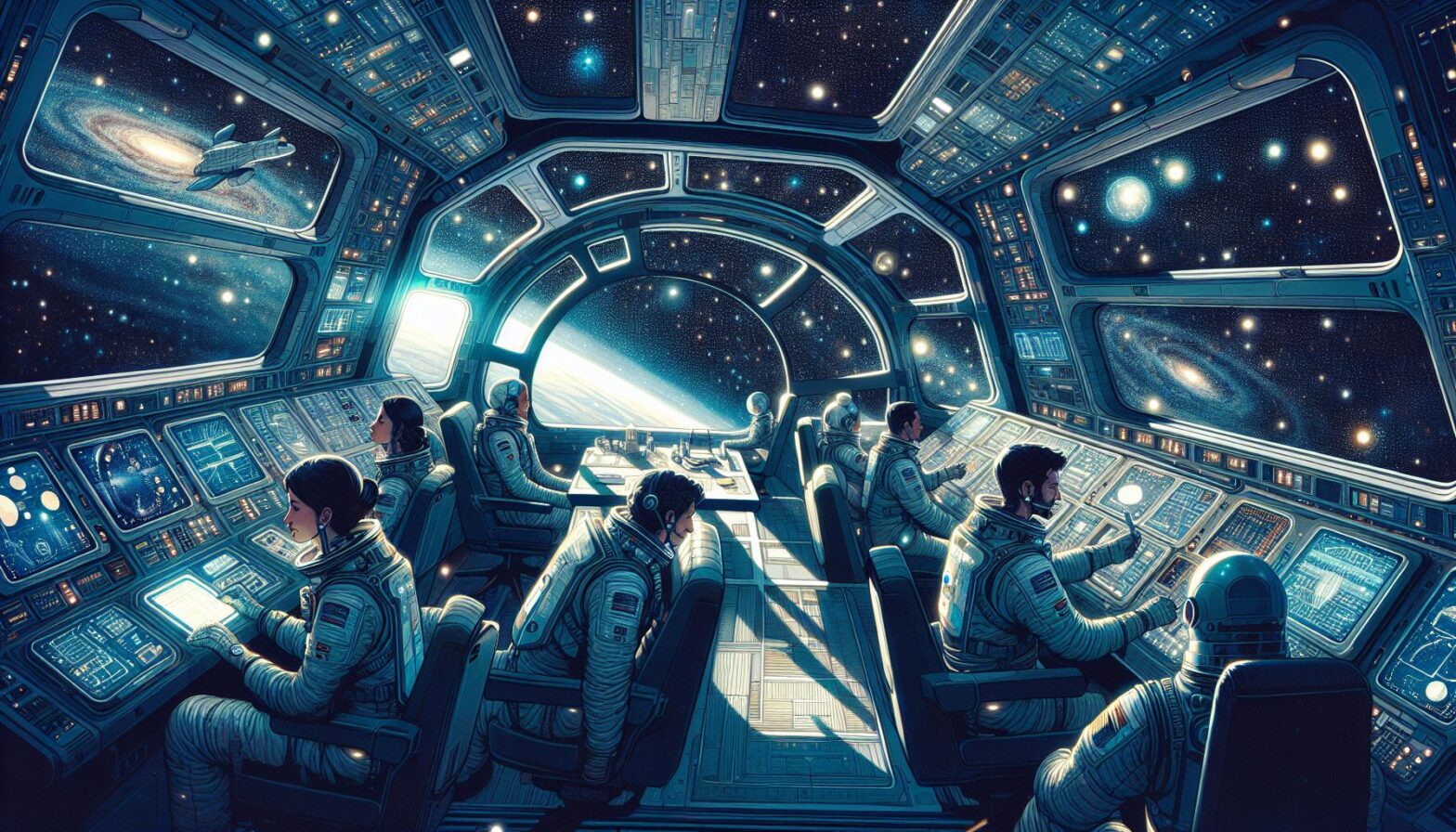
Hey everyone! Strap yourselves in, because today we’re launching into the cosmos to chat about one of the most thrilling topics in tech right now—space travel! Yep, that’s right; we’re literally reaching for the stars here. The dream of flying into space isn’t just for sci-fi fans or astronauts anymore; it’s becoming part of our reality, one wild innovation at a time. So grab your space helmets and let’s dig into what’s happening in this star-studded arena.
The New Space Race
Alright, let me spill some cosmic beans: there’s a new space race in town, and it’s not just your usual suspects—NASA and Roscosmos. I’ve been watching private companies enter the space arena, and it’s like witnessing a blockbuster heist movie with all the drama, innovation, and risk. SpaceX, Blue Origin, and Virgin Galactic are the names on everyone’s lips these days, and for good reason.
SpaceX: The Mavericks of Mars
First, let’s talk about SpaceX. You might have heard that their goal is to make life multiplanetary by setting up a human colony on Mars. Now, Elon Musk is not one for small dreams, and SpaceX is already making real progress. The Starship rocket, designed for this very purpose, had me on the edge of my seat when they did that high-altitude flight test. Imagine waking up one morning, packing your bags, and catching a flight to Mars—it’s the stuff dreams are made of. Well, futuristic dreams, but you get the point.
Blue Origin: Jeff Bezos’s Brainchild
Next up is Blue Origin, led by Jeff Bezos. While SpaceX is looking at Mars, Blue Origin has its eyes firmly on lunar exploration. Project Blue Moon aims to return humans to the Moon, and it’s got some seriously exciting implications for future lunar bases. Bezos often jokes that he founded Amazon to fund Blue Origin, and honestly, I’m starting to believe it! We might just see lunar tourism in our lifetime. How cool would that be?
Virgin Galactic: Space Tourism for the Win!
Let’s not forget Virgin Galactic, whose approach is a bit closer to home—literal space tourism. Richard Branson’s baby offers suborbital flights that bring us regular folks (who can afford a ticket) to the edge of space for a short but life-changing experience. It might not be a one-way trip to Mars, but it certainly beats the view from your average airplane window.
The Technological Leap
You might wonder, what’s behind this sudden cosmic rush? Well, technology has reached a point where the constraints holding us back are becoming minor hurdles rather than insurmountable barriers. Reusable rockets, advanced propulsion technologies, and cutting-edge materials are just a few of the innovations making space more accessible.
Reusable Rockets: The Game-Changer
Remember the days when rockets were single-use, like a one-time fireworks show? Those days are fast becoming a relic of the past, thanks to the likes of SpaceX’s Falcon 9. Reusability is the name of the game. By dramatically cutting the cost of getting to orbit, reusable rockets make space travel sustainable in the long term. Imagine if every time you flew somewhere, the airplane was discarded afterward—space travel is shedding that inefficiency.
Advanced Propulsion: Beyond Liquid Fuel
We’ve also got some mind-bending propulsion technologies in the pipeline. Ion engines and other electric propulsion systems are gaining real momentum. They promise to make interplanetary travel more feasible and less costly. There’s even talk about turning plasma propulsion into a practical technology. Let’s be clear: these aren’t just pipe dreams but tech grounded in current research, ready to propel us into an exciting future.
What It Means for Humanity
Okay, before I get completely carried away on this rocket ship of information, let’s consider why all this matters. Beyond the cool tech, space travel has big implications for humanity’s future.
Space Habitat: A Safety Net for Earth
Here’s a bit of armchair speculation: being able to colonize other planets might just be the safety net humanity needs. With climate change, pandemics, and other existential risks looming, having a second—and perhaps a third—planet to call home increases our odds of survival. It’s the cosmic equivalent of not putting all your eggs in one basket.
Economic Opportunities: The Space Gold Rush
Then there’s the economic potential. The space economy could be the new Gold Rush, creating jobs, industries, and opportunities that we can’t even fully imagine yet. Companies like Planetary Resources are already eyeing asteroid mining, which might make the idea of literal space gold sound less like sci-fi and more like a savvy investment pitch.
Inspiration and Unity
Lastly, space exploration represents the best of what humans can achieve. It’s about encouraging ingenuity, collaboration, and a sense of unity—because when you’re looking at Earth from way up there, national borders become invisible lines in the sand.
The Road Ahead
So, what’s next on this cosmic journey? Many challenges still lie ahead—regulations, funding, technological hurdles—but none of these are insurmountable. As we look to the skies, remember that the pioneers of aviation were once told they were crazy. Fast-forward to today, and we’ll see how history might just repeat itself, this time in space.
If there’s one takeaway from this cosmic exploration, it’s this: Keep watching the skies because space travel is just getting warmed up, and we’re only scratching the surface. Who knows, the phrase “next stop, Mars” might soon ring through an interstellar airport (or spaceport, if you will) near you.
Till then, stay curious and keep looking up!