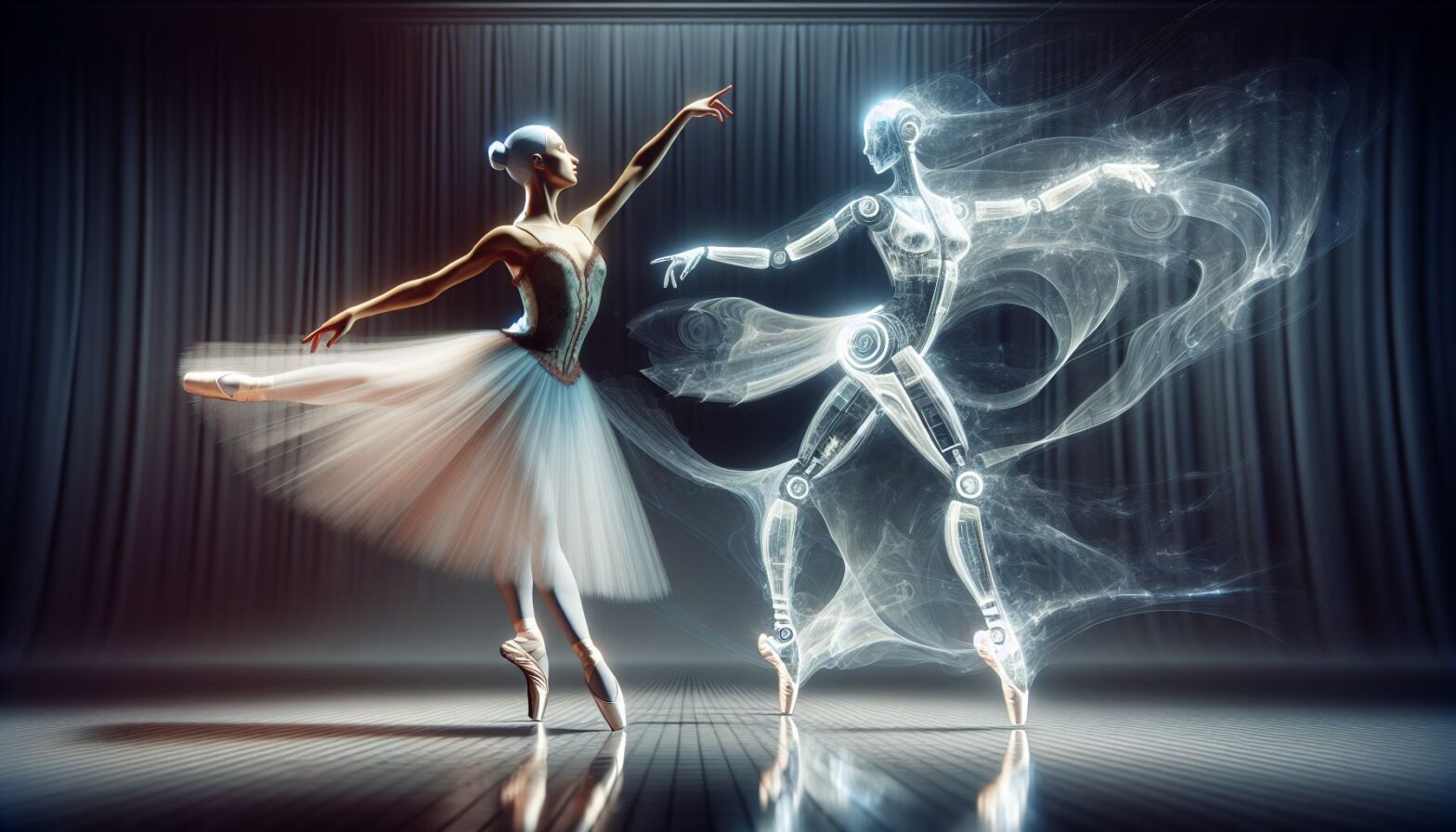
Hey there, fellow tech enthusiasts! Buckle up because today we’re diving into the world of artificial intelligence and its weird new relationship with creative arts. If you’d told me a decade ago that my computer could be a creative muse, I’d have probably laughed it off as the setup for a bad sci-fi movie. “Yeah right,” I’d chuckle, “next thing you’ll tell me is that robots are gonna paint like Picasso.” Fast forward to today, and AI models are creating artworks that challenge our very notions of creativity. Let’s figure out this digital renaissance together!
The Brush Strokes of AI: A Brief History
To really appreciate what’s happening, we need to rewind a bit. AI in art isn’t exactly breaking news. From the early experiments with simple algorithms that produced basic shapes, to the complex neural networks today, it’s been quite a journey. Back in the mid-2010s, Generative Adversarial Networks (GANs) changed everything. GANs, the brainchild of researcher Ian Goodfellow, operate by setting two neural networks against each other. One creates, and the other critiques, refining the work over and over until something emerges that can fool even sharp critics.
Then we had projects like Google’s DeepDream that turned ordinary photos into surreal kaleidoscopic masterpieces. Remember those psychedelic landscapes filled with dog faces and eyeballs everywhere? What a time to be alive! These tech experiments opened our eyes to the artistic potential locked within lines of code. The art world started paying attention.
The Rise of AI Creators
In the past few years, AI has moved past that weird experimental stage. Companies like OpenAI and DeepMind are pushing what these algorithms can actually do. Take OpenAI’s DALL-E, for instance. It creates images from text descriptions that rival work from experienced artists, basically turning imagination into visual reality. You describe it, and DALL-E paints it.
This isn’t just theoretical anymore. Professional artists are using AI to help their creative processes. Take internationally celebrated artist, Refik Anadol, who merges data and machine learning to produce immersive installations. It’s a real collaboration between human vision and AI execution.
And let’s not forget AI in music! Tools like AIVA (Artificial Intelligence Virtual Artist) can compose symphonies that actually evoke emotion. Sure, it’s not replacing Beethoven anytime soon, but it brings an interesting layer to music production, offering fresh compositions and collaborative opportunities to human musicians. Imagine a jam session with an algorithm. Jazz meets artificial evolution!
Breaking the Fourth Wall: The Human Element
So, I hear you asking what about the artists? Are they all worried AI will take over the creative world? Interestingly, it’s not that simple. Most artists embrace this digital companion, much like how photographers embraced Photoshop and digital cameras.
In fact, AI art tools are everywhere now, even for amateur creators. Platforms like Artbreeder allow users to manipulate “latent spaces” in art, generating new images based on user inputs. It’s an intuitive interface for non-coders to create complex art pieces. It’s like Matisse meets a motherboard: human imagination enhanced by computational power.
Artists are taking the best of both worlds, blending algorithmic creativity with human sensitivity. AI becomes another tool, one that amplifies creativity instead of replacing it. And let’s be honest, there’s something profoundly human about wanting to take potential and craft it into something beautiful, even if that potential is a set of floating-point calculations.
Challenges and Ethical Quandaries
With great power comes, you guessed it, great responsibility. AI in art raises plenty of ethical questions. Take ownership, for instance. Who owns an AI-generated piece? Is it the programmer, the individual who input the data, or the AI (I know, can an AI own anything?)? Legal systems worldwide are wrestling with these questions, much like they did with digital music in the Napster era.
Then there’s the concern of bias. AI models learn from existing datasets, and art is no exception. If an AI is trained on a biased dataset, or one lacking diversity, that bias will color its creative outputs. Striking a balance, ensuring diverse inputs, and maintaining ethical programming guidelines is an ongoing challenge. However, mindful development can turn potential problems into powerful learning experiences.
The Future: A Merging of Minds
Looking ahead, I think we’ll see even more integration of AI in creative processes. Imagine digital canvases that help artists visualize concepts in real-time, or AI curators that assist in creating personalized art experiences tailored to individual tastes. Speculative, sure, but if there’s one thing we’ve learned from fast-evolving tech, it’s to expect the unexpected.
Ultimately, the dance between AI and art is still in its early stages. But what a strange dance it is! It shows human ingenuity at work: curiosity-driven, constantly innovating, forever pushing the boundaries of what’s possible. As AI continues to grow, I’m excited to see how it’ll inspire the next generation of creatives to dance along the ever-blurring line between technology and artistry.
So grab a seat, my friend! We’re just getting to the good part of the performance. Who knows? The next Picasso might be a program. And honestly? I can’t wait to see how it all unfolds.