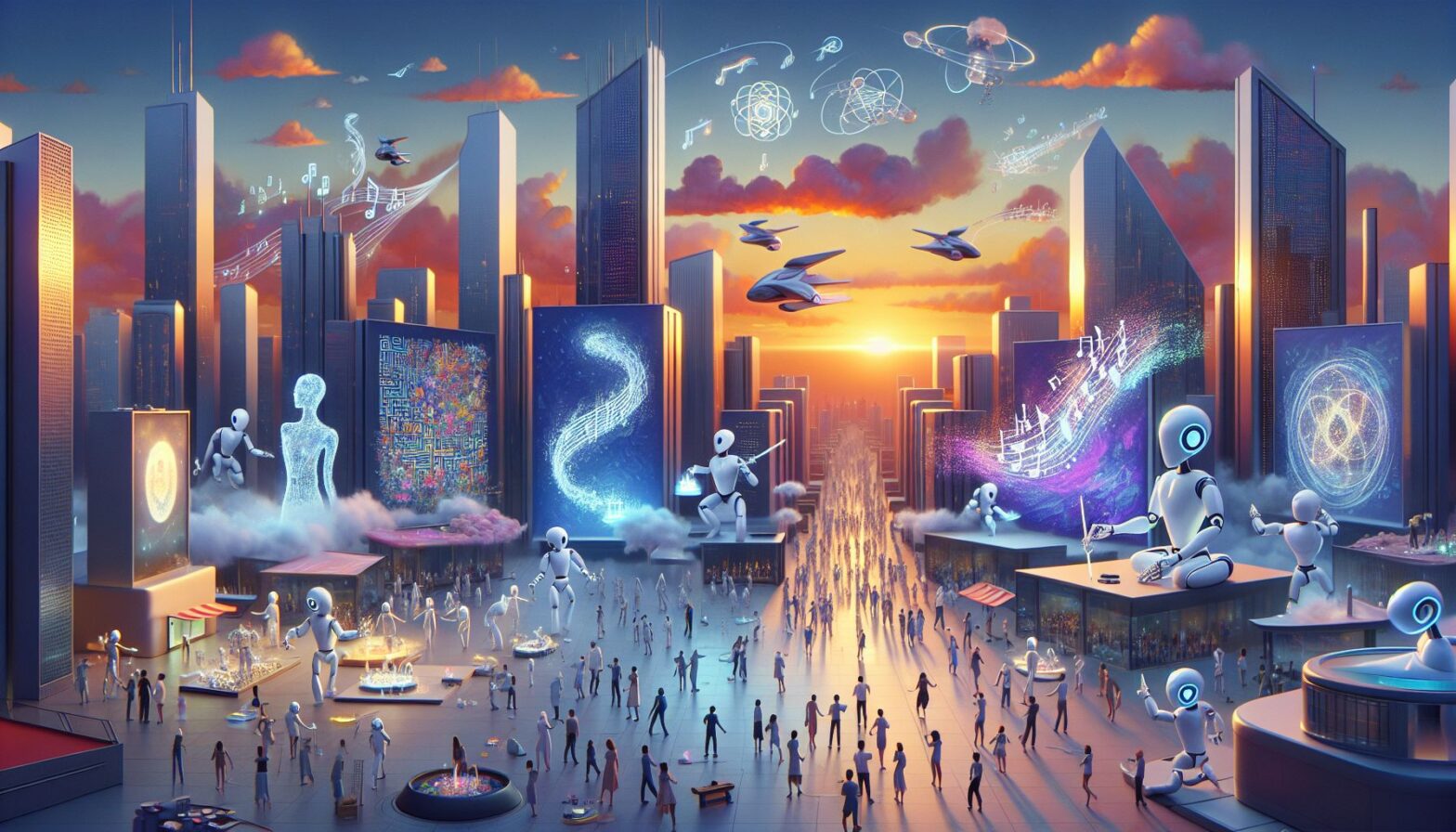
Hey there tech enthusiasts and curious adventurers! Today I’m diving into a topic that’s close to my heart and tickles my brain in all the right ways: the role of Artificial Intelligence in the creative arts. It’s where cold, hard algorithms meet human imagination, and the results are often nothing short of magical. So grab your favorite snack, settle in, and let’s explore this brave new world where machines aren’t just crunching numbers—they’re making art!
The Creative Machine: Where We Are Now
Let’s start with a reality check. As of now, Artificial Intelligence has already worked its way into the arts in ways that would’ve been sci-fi fodder just a decade ago. Remember when AI was all about beating chess grandmasters or sorting your spam emails? Well, now it’s co-authoring novels, composing symphonies, and even painting portraits that can fetch a cool million at auction. Who would’ve thought?
Consider GPT-3 by OpenAI, a model so wordy that it can churn out a Shakespearean sonnet or write blog posts like this one—only, not with my charming typos and questionable humor. Or Google’s DeepDream, which turns photos into trippy hallucinogenic visuals that would wow even the most seasoned psychedelics aficionado. AI has gone beyond being a “tool”—it’s becoming a collaborator.
Art Meets Algorithm
You might wonder: How does AI create? Spoiler alert: They don’t daydream like us. What they do is process vast amounts of data through algorithms and mimic patterns they identify. It’s kinda like a chef who’s never tasted food but has memorized every recipe in the world. That’s how AI can generate copycat art.
Take music, for instance. Companies like AIVA and Amper Music are using AI to compose classical symphonies or pop tracks. They’re not just pressing play on random chords, either. Their algorithms analyze thousands of compositions to understand what makes a tune catchy or an orchestral piece stirring. I’m not saying your next favorite song will be written by a robot, but it could happen!
Visual arts are having their AI renaissance as well. Take the case of “Edmond de Belamy,” the AI-generated portrait auctioned by Christie’s. It wasn’t created by a singular genius artist but by an algorithm trained on a data set of 15,000 portraits. Voilà! Art born from a neural network.
The Human Touch
But wait, some of you might be asking, “What about the human spark, that intangible essence of creativity?” Fair question! As much as AI can mimic styles or patterns, the complex creativity—turning raw, personal experiences into art—is still a uniquely human domain.
Think of AI as a fantastic tool in an artist’s toolkit. Just as how Photoshop didn’t replace illustrators but enhanced their craft, AI can amplify creative expression. One could argue that AI is the new paintbrush, expanding the palette of possibilities. So instead of replacing human artists, AI might just be their greatest muse yet.
Challenges Dominate the Canvas
Let’s not gloss over the hiccups and hurdles, though. For starters, there’s the question of originality. When an AI generates art, is it truly original, or is it a remix of pre-existing works? Plus, who owns the rights—a question that’s giving IP lawyers sleepless nights.
There’s also the dystopian fear of automation: Will AI make artists obsolete? I say no, because art is inherently human. It evokes emotion and conveys stories grown from the human experience. But yeah, if your life goal is to paint landscapes on mass, maybe consider a backup plan.
Peeking into the Crystal Ball
If we set our imaginations free and look a few decades down the road, what might AI artistry look like? Picture walking into a virtual gallery where artworks adapt to your mood, compose music tailored to your emotional needs, or write narratives that morph based on your feelings.
In this future, creativity could become hyper-individualized. Everyone might have their own bespoke poem, symphony, or film. Even fashion could undergo a revolution, with designs generated in real-time based on cultural trends. It’s a techno-utopian vision that promises boundless creative freedom.
Bringing It All Together
In the end, the growing marriage of AI and human creativity opens up a universe of potential we’ve only begun to explore. It’s less of a battle between man and machine and more like a budding friendship that, when nurtured, will redefine what’s artistically possible.
So, whether you’re an artist excited about these tools, an AI expert eager to flex some creative muscle, or just a curious soul pondering the future, one thing’s clear: This is an exciting time for art and technology. The canvas has never been larger and the palette never more diverse. Who’s up for creating a masterpiece?
Until next time, keep dreaming, keep creating, and remember—don’t feed the algorithms after midnight!